
Mechanics of Desire
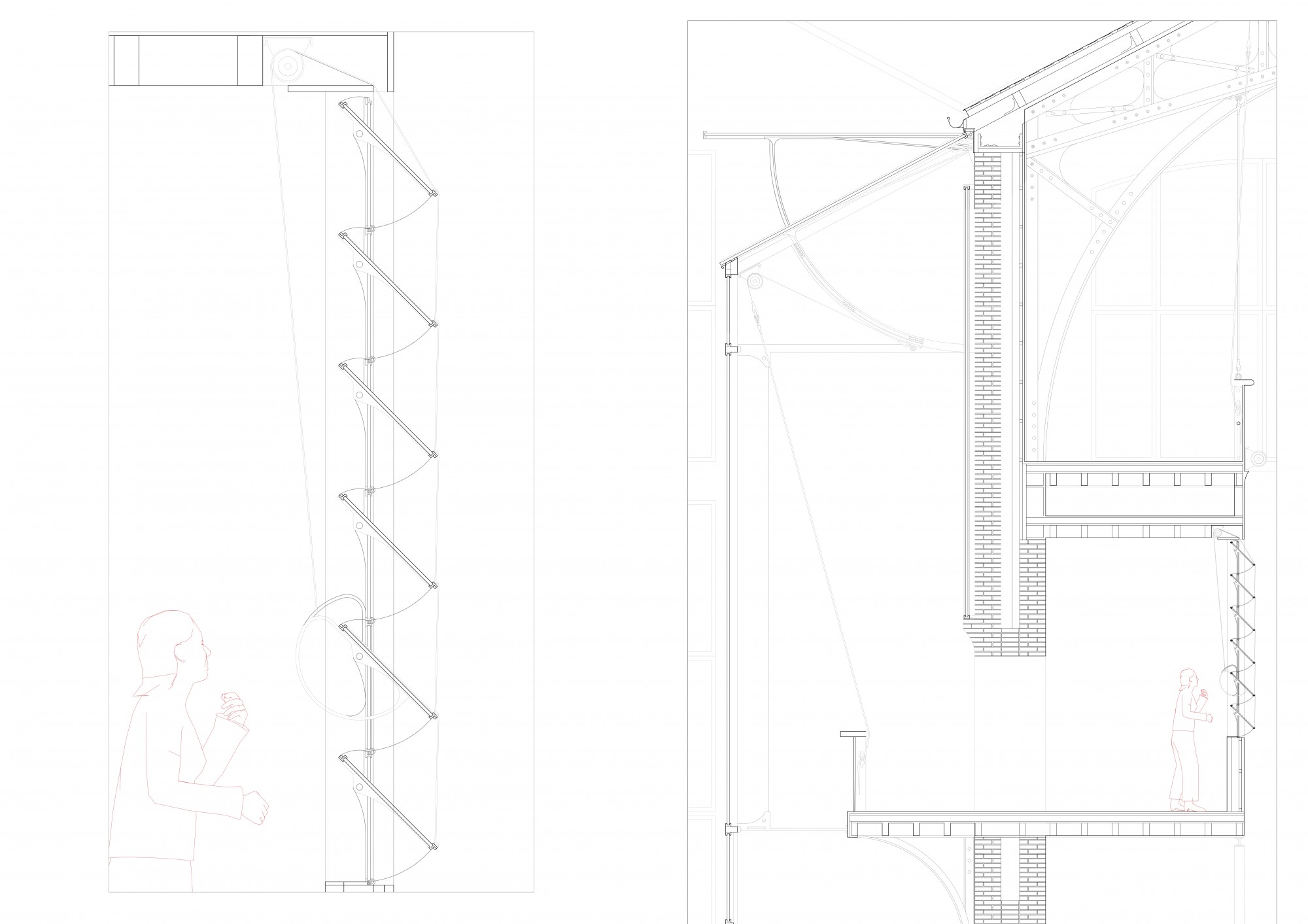

“To the fiction of need, one must oppose the reality of desire.”
(Lukasz Stanek, Henri Lefebvre on Space: Architecture, Urban Research, and the Production of Theory, University of Minnesota Press, 2011)
Taking as its starting point the notion of the “desiring-machine” developed by Deleuze and Guattari, this studio initiates a broader line of inquiry—one that could extend over several semesters—into how architecture captures and transforms desire, redefines urban situations, and interrogates social processes. The study trip to Brest, a city emblematic of destruction and reconstruction, will serve as a living laboratory, enabling an exploration of how architecture, understood as an evolving mechanism, can move beyond merely responding to crises to generate new forms of urban and social life.
“DESIRING MACHINES”
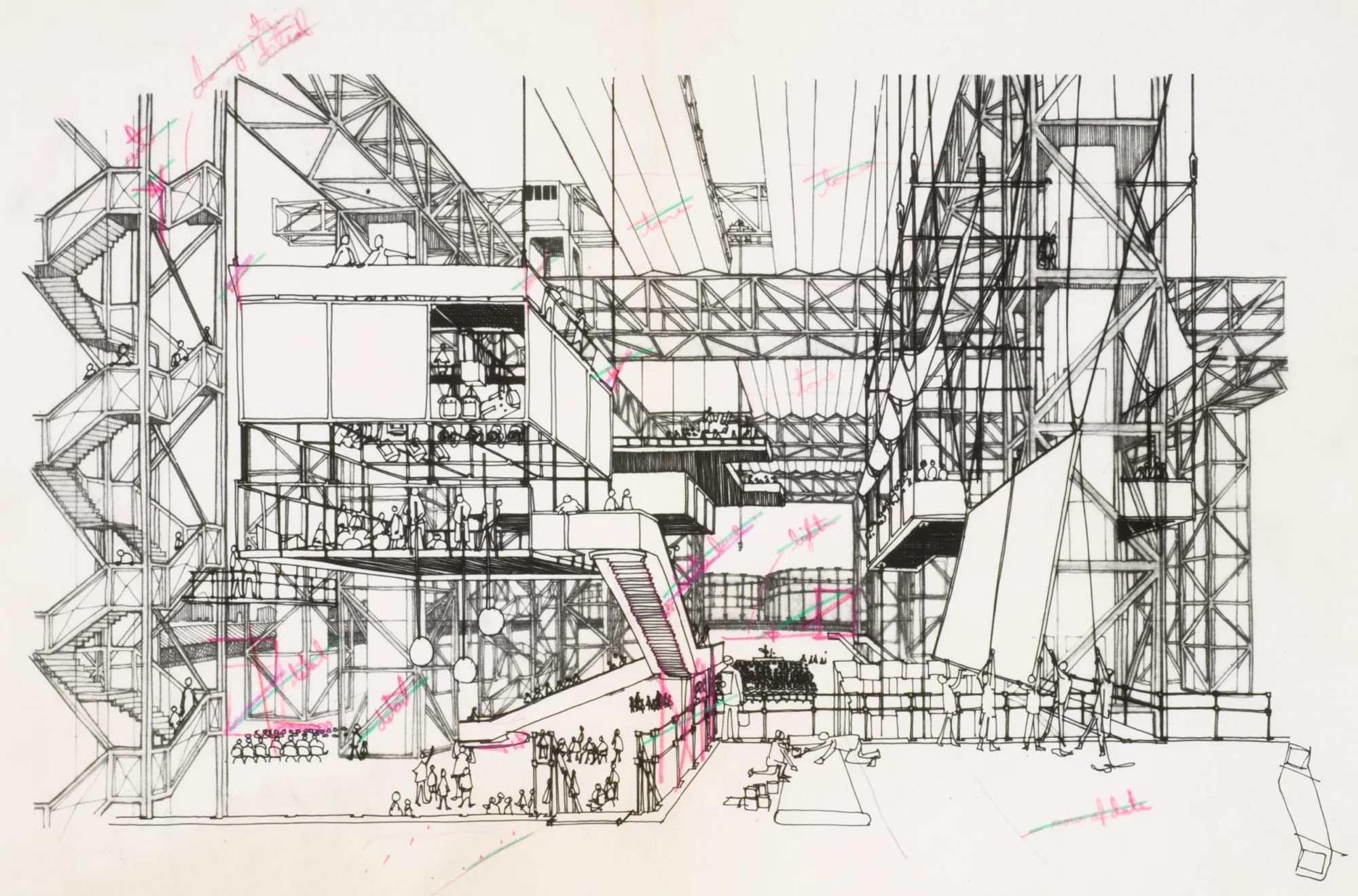
The studio is grounded in a critical approach to architecture, understood not as a site of resolution or appeasement, but as a field of confrontation between conflicting desires (subjection/emancipation, repression/sublimation, frustration/transgression, etc.). More precisely, it seeks to examine how architecture captures, distorts, and reconfigures desire through “machinic assemblages,” without aiming to reconcile them. For what if, in architecture, everything were only ever a matter of machine(s)? Machines of control, machines that digest and transform (raw matter), war machines, money-making machines, elevating machines, galleries of machines, machines (that leave us) desiring, theatrical machines, machinations.
In this perspective, the studio becomes an invitation to weave imagination and awaken a reflective creativity; a call for a plunge and a counter-plunge—where practice and theory intertwine without distinction—into the captivating universe of machines: what composes them (tools, instruments, devices), and what, in turn, composes us through them.
The plunge is that of the hand that shapes, that takes pleasure in the act of making—this “hand that knows,” to borrow Sennett’s words. It is a deep engagement, that of the craftsman who, disregarding profitability, constantly revisits the work, driven by the love of doing things well. Today, this takes the name of commitment.
The counter-plunge, by contrast, is a necessarily critical gaze, one that seeks to encompass our own tools of representation, conceptualization, and fabrication—without opposing them. It is a form of inverted cinematography which, in a double movement, strives to weave an inseparable relation between hand and mind. Starting from the premise of a co-evolution between humans and their tools, instruments, and machines—entities they have forged, yet which have acquired a certain autonomy and, in return, have shaped the human—we engage in a reflection that questions both architecture and the architect, or more precisely, what constructs us as architects.
DESIRE OF MACHINE
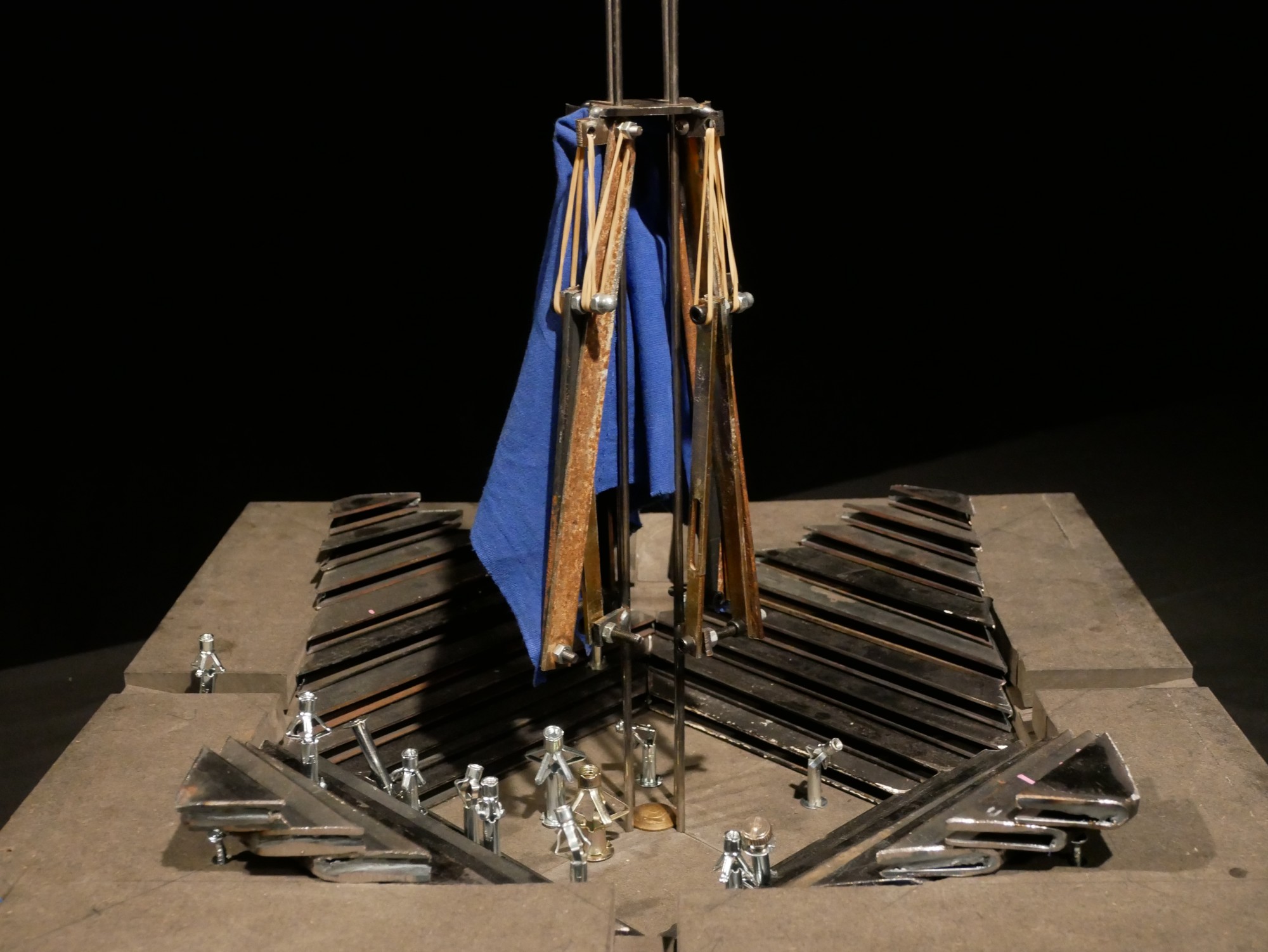
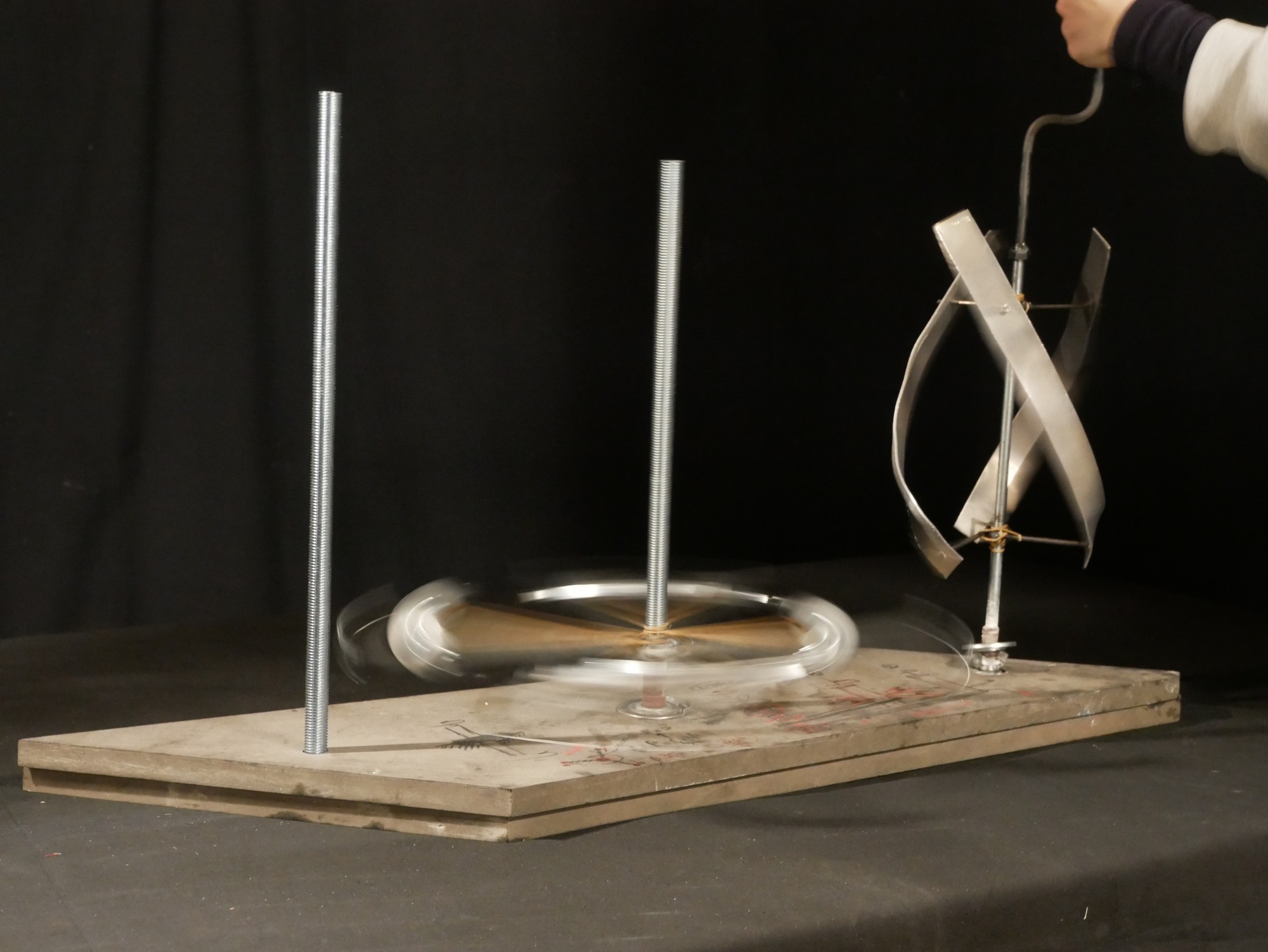
A first step in this inquiry into co-evolution within our discipline might take the form of a “deconstruction”—though can we ever truly do anything other than “construct,” even in negative form? Perhaps it would be more accurate to speak of fragmentation, disassembly, or dismantling of this machinery that is our own. For these architectural machines, though traversed by desire, are they not composed of gears, pulleys, motors, belts, switches—whether visible or concealed within layers of complexity?
In this sense, we might operate like a mechanic, a stage machinist, a cyberneticist, or even a film editor who, at the editing table, carefully dissects mechanisms—isolating components to repair or replace them, before reassembling them anew. Never quite identically, but perhaps according to a new arrangement, in response to present conditions.
To do so, it is essential to pay renewed attention to our own tools—of both representation and fabrication—in order to reconnect with them and reintegrate them into our daily practice. We will begin by drawing a clear distinction between tool and instrument, between apparatus and device. These “operational words,” so frequently used, possess distinct origins and histories rooted in the evolution of thought, and must not be conflated.
Tools may be understood as extensions of the human body, intended primarily to augment strength and dexterity—levers, axes, hammers. Instruments, by contrast, operate within a broader technical milieu, where the human does not intervene at every stage, but instead grants them a degree of autonomy. As Gilbert Simondon incisively notes:
“If by ‘tool’ one means the technical object that extends and arms the body to accomplish a gesture, and by ‘instrument’ the technical object that extends and adapts the body in order to obtain better perception, then the instrument is a tool for perception.”
(On the Mode of Existence of Technical Objects, Aubier, 1958 / later editions)
In constant transformation, instruments do more than enrich the body’s utility and perceptual capacity. They give rise to more complex concepts, intimately woven into space and time, such as apparatus and device (Agamben, Déotte, Foucault). These exceed mere functionality: they encompass, in a single movement, social structures, power dynamics, and mechanisms of control that shape our relation to the world:
“What I am trying to identify under this name [device] is, first, a thoroughly heterogeneous ensemble consisting of discourses, institutions, architectural arrangements, regulatory decisions, laws, administrative measures, scientific statements, philosophical, moral and philanthropic propositions—in short, as much the said as the unsaid. The device itself is the network that can be established between these elements.”
(Michel Foucault, Dits et écrits, vol. III, 1976–1979)
At the heart of this dense network—where discourses, institutions, and collective practices intersect—machines rise beyond their status as mere technical objects. They become agents of control, planning, and socio-spatial organization, integrated into the social fabric.
These devices are no longer simple instruments; they embody complex machines, formed through the patient assemblage of functional, symbolic, and political dimensions shaped by long historical, social, and technical processes. As Simondon writes, the machine must not be understood merely as an advanced tool, but as an active element within a milieu structured around it—one that transforms both living conditions and spatial organization.
Yet this studio does not confine itself to speculation or theoretical enclosure. If the exploration moves between theoretical immersion and practical engagement—without ever separating them—it remains firmly grounded in a materialist approach. Through the study of references—drawn, written, or built—we will examine how the “mechanical body” of architecture is concretely formed. Through analogy, we will identify the tools and instruments that compose this architectural machinery. And we return to the initial tension: Machine(s) / Desire(s).
MACHINE OF DESIRE
By a fortunate convergence, there exists a singular thinker—or rather a dual entity—who forged an unprecedented synthesis of these concepts: Gilles Deleuze and Félix Guattari. In developing the concept of the “desiring-machine,” they radically transformed our understanding of desire.
Desire resists capture; it cannot be reduced to need or lack. Throughout the history of Western philosophy, it has been examined, elevated, tempered—but never fully grasped in its complexity. Plato idealized it, Epicurus pacified it, Spinoza liberated it. But with Deleuze and Guattari, desire emerges as a productive force: not a lack to be filled, but an active process that connects beings to one another and to the world in continuous production.
In this sense, desire is not absence—it is a machine. A machine that produces, connects, multiplies. A “desiring-machine,” a continuous machinic process generating worlds, realities, and possibilities. We are no longer in Platonic idealism, Epicurean moderation, or even Spinozist rationality. We are within assemblage, within machinic organization—whose power architecture materializes, as a vibrating body that captures and releases desiring energy. It is no coincidence that the factory—an essential spatial model of the industrial revolution—feeds this Deleuzian vision of architecture:
“The factory, the school, the family, the city are not machines in the sense of technical objects found in factories. But they are machines insofar as social assemblages are machines for producing desire. What architecture does is organize collective assemblages of desire.”
(Gilles Deleuze & Félix Guattari, Anti-Oedipus, 1972)
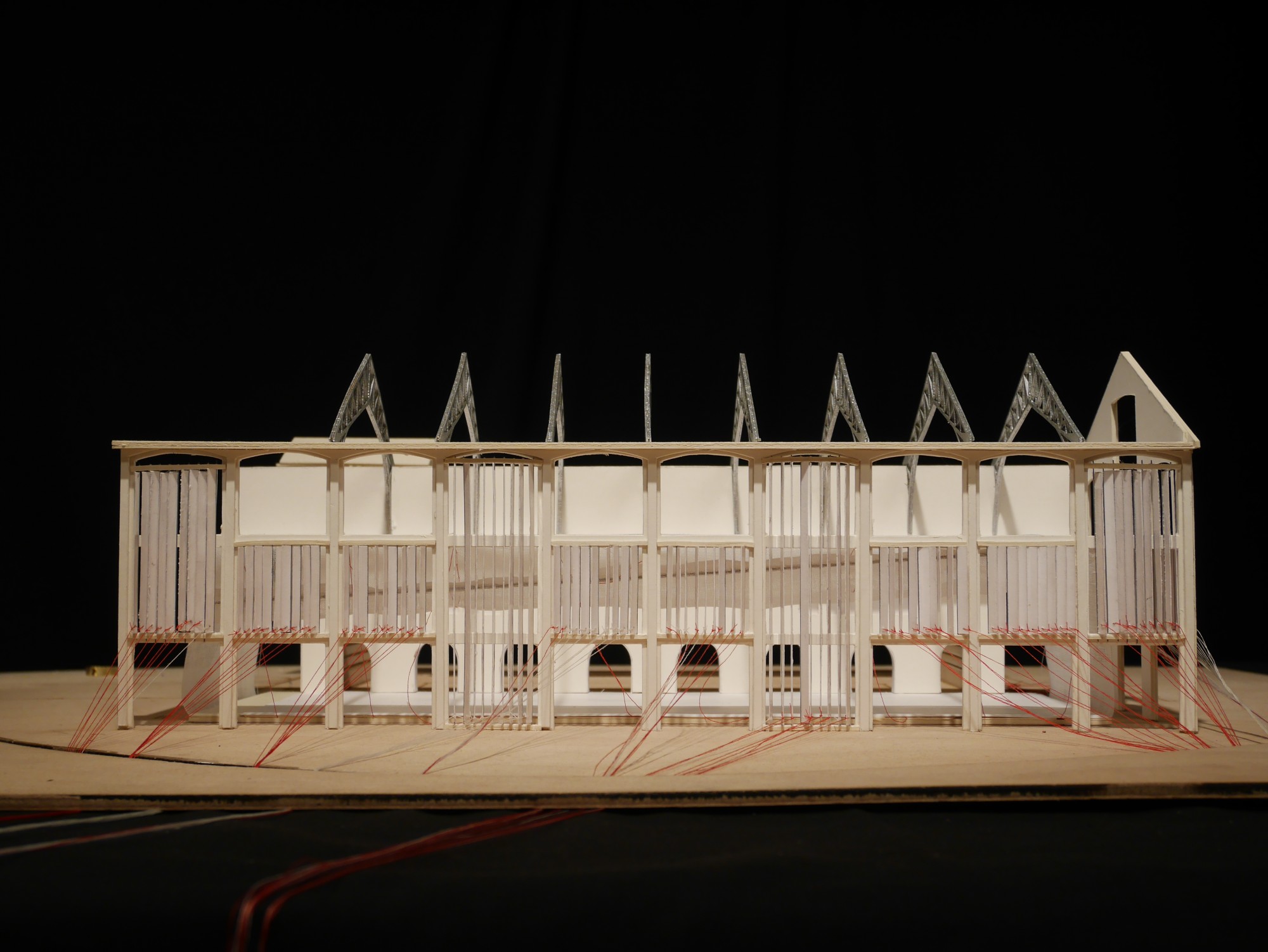
In this studio, students are invited to explore how, like these “desiring-machines,” architecture captures and transforms desire through specific tools and devices that modulate and organize human flows, generating new arrangements of matter and energy. The study trip to Brest—a city marked by destruction and rebirth—will also serve as a reference point for the concept of the “abstract machine” (cartography and diagram), revealing unconscious desires and heterogeneous flows of connections involved in processes of deterritorialization and subject formation.
We will examine urban situations in which architecture has had to respond simultaneously to urgency, transformation, and reinvention—while contributing to the reassembly of collective memory. This displacement becomes an invitation to critically explore architecture’s potential—not only as a response to urban trauma, but as an active agent in reshaping the very pulsations of desire.
This urban theatre thus becomes a living laboratory for students, where architecture, understood as a subtle mechanism, can move beyond reactive responses to crises and generate new forms of urban life and social coexistence. The studio does not approach architecture merely as a technical or aesthetic discipline, but as a critical practice engaged in the ongoing redefinition of living conditions—one that interrogates and reconfigures the flows of power and information shaping our contemporary world.